No complete location system required
Pickers can continue relying on their existing warehouse knowledge.
PickPaperless
PickPaperless is a simple digital picking application for warehouses that have outgrown paper pick sheets but are not ready for a full warehouse management system.
Import the work you already create, assign it to pickers using ordinary phones or tablets, and receive completed picks and exceptions back digitally.
PickPaperless is a working prototype. This page reflects the current stage of the project—the objective right now is operator discovery and pilot validation, not a finished, generally available product.
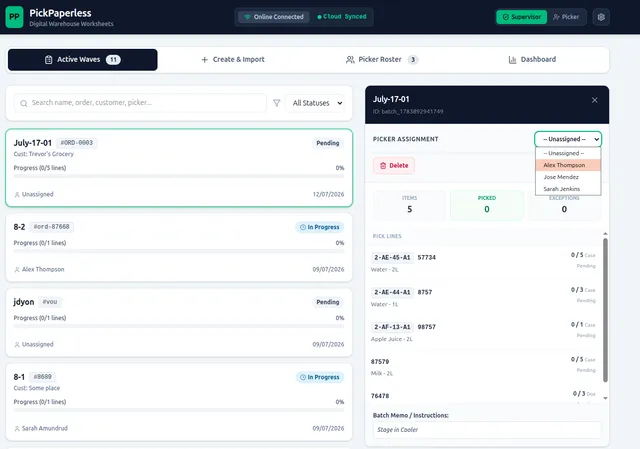
Paper picking can work well for a long time. The problem comes when managing the paper creates more work than the picking itself.
Supervisors may not know how far an assignment has progressed. Shortages and damages are reported late. Completed sheets must be interpreted and entered manually. Updated instructions depend on finding the right picker and the right piece of paper.
A full WMS may solve those problems, but it can also require new hardware, structured warehouse data, process redesign, and a substantial implementation project.
PickPaperless is intended to provide a practical step between those two extremes.
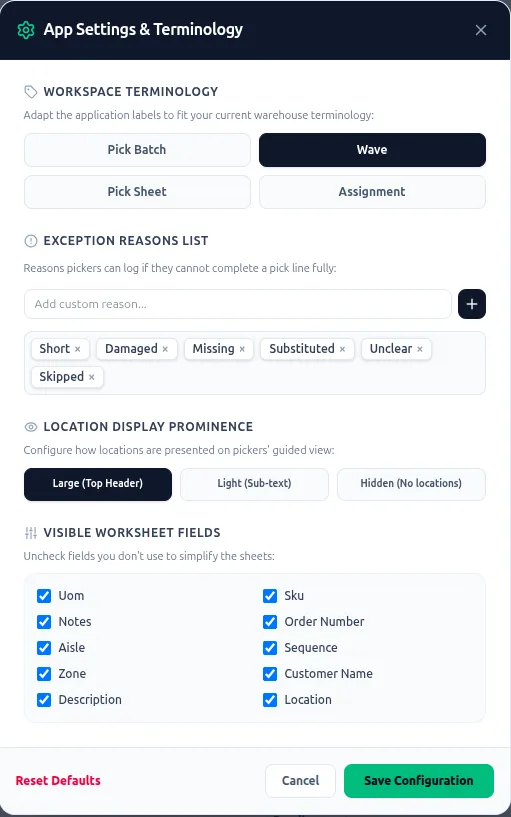
PickPaperless is designed to digitize an existing picking process without making every common WMS field a prerequisite.
An assignment can be as simple as a description and quantity. Locations, SKU numbers, barcodes, zones, units of measure, customer information, and other fields can be used when they are helpful—but they do not all have to exist before the warehouse can begin.
Pickers can continue relying on their existing warehouse knowledge.
Barcode confirmation can be added later where it provides value.
Use ordinary phones or tablets with appropriate protection.
Offline operation is a core design requirement, with assignments intended to be completed offline and synchronized when connectivity returns.
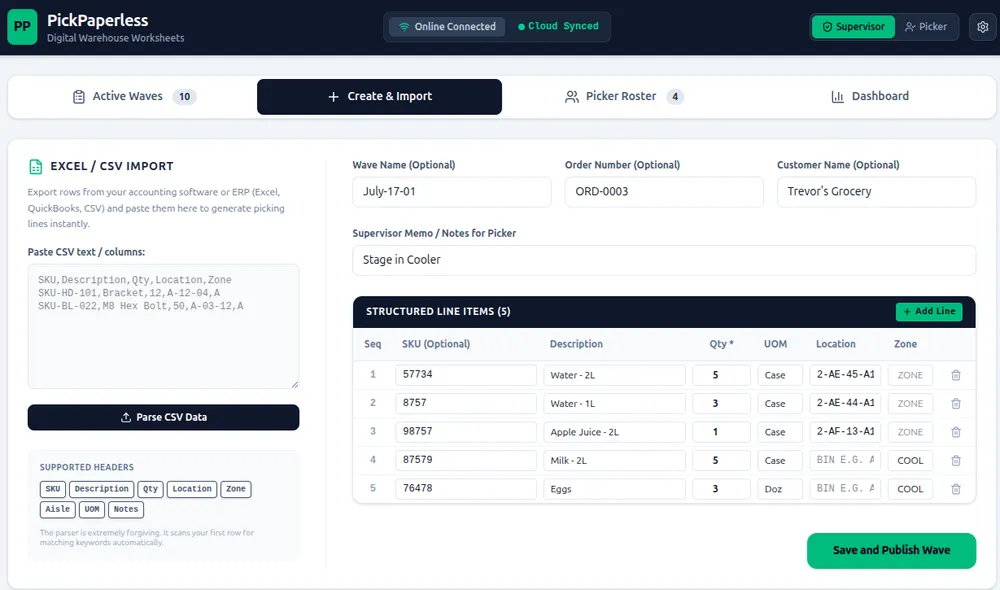
Import or paste order and pick information from an existing spreadsheet or business system. Use the fields you already have rather than rebuilding the warehouse data model before getting started.
Supervisors can review active work, assign it to an available picker, and see whether it is pending, underway, or complete.
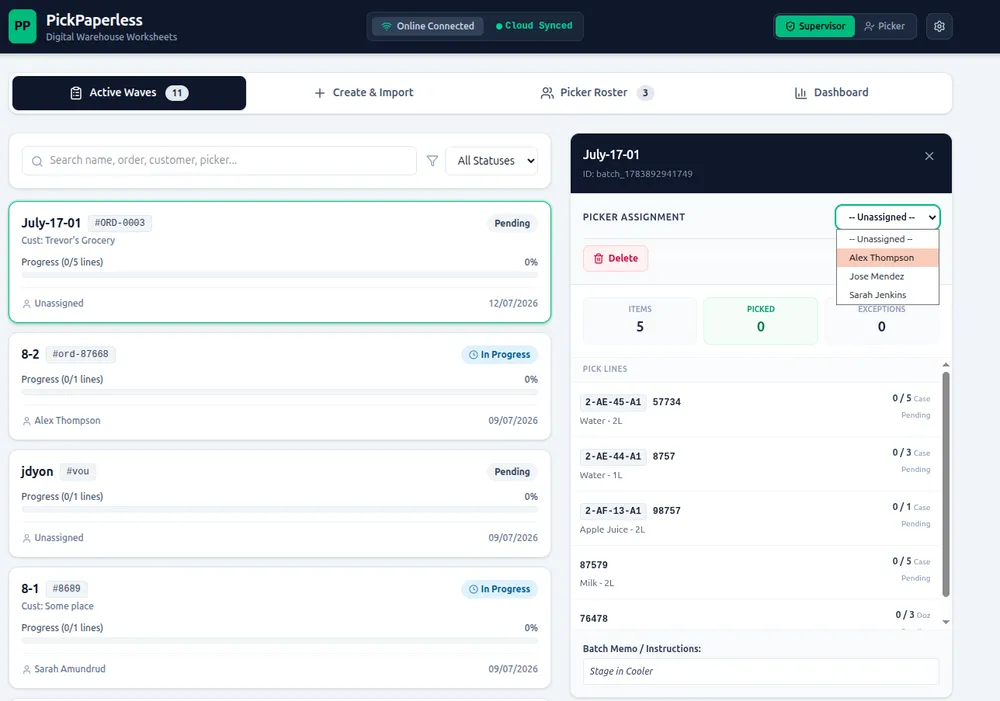
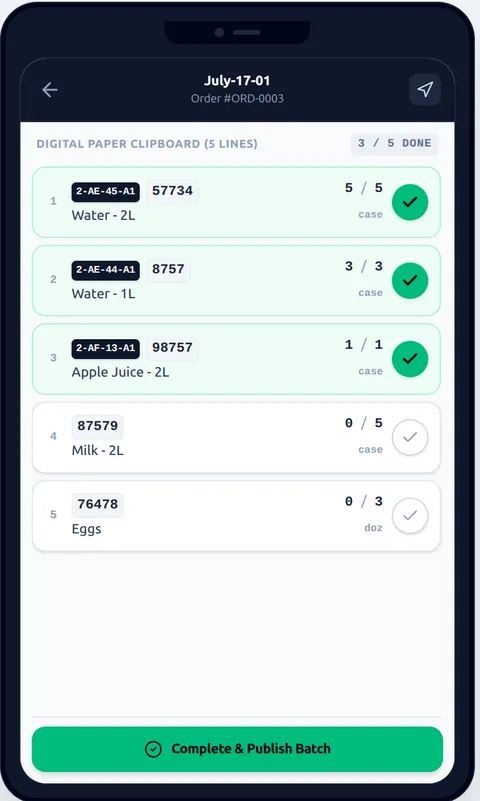
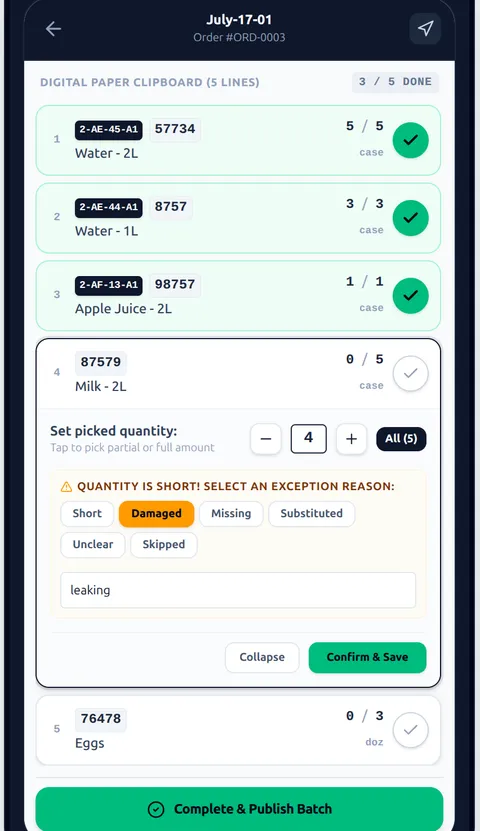
Pickers receive a simple mobile worksheet showing the information their warehouse uses. They confirm full or partial quantities as they work.
When the requested quantity cannot be completed, the picker can record what happened and add a note while the information is still current.
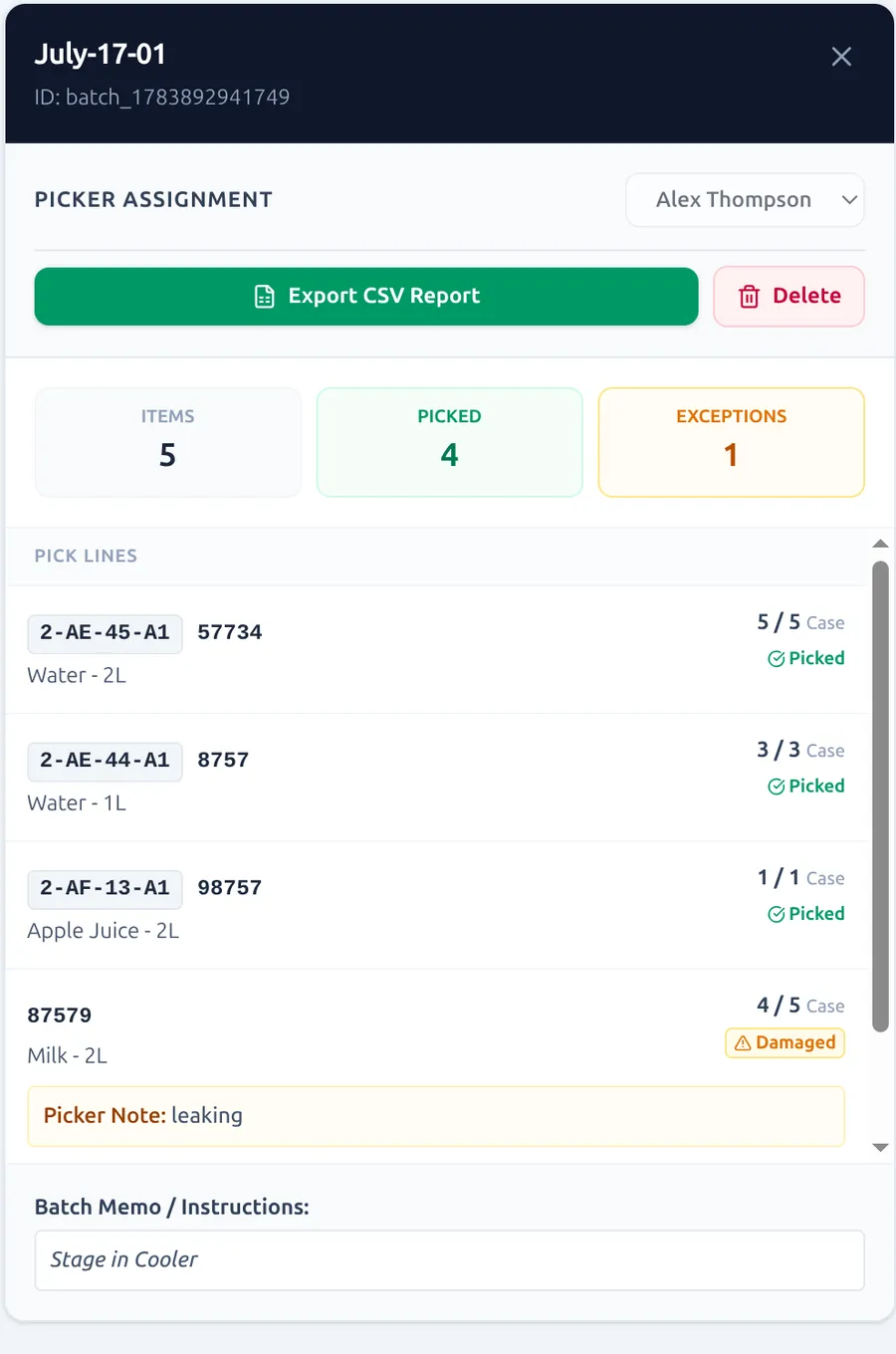
Supervisors can review picked quantities, exceptions, and operator notes, then export the completed result for use in the company's existing process.
Warehouse Wi-Fi is often strongest near the office and weakest where the work actually happens.
PickPaperless is being designed so operators can download their assignments while connected, complete the work without continuous connectivity, and synchronize the results when they return to a reliable connection.
See which assignments are waiting, assigned, underway, or complete.
Receive shortages, damages, and picker notes without waiting for paper to return.
Export digital results rather than re-entering handwritten records.
Begin without a complete WMS, warehouse redesign, or barcode project.
Add more structured fields and processes when the operational benefit justifies them.
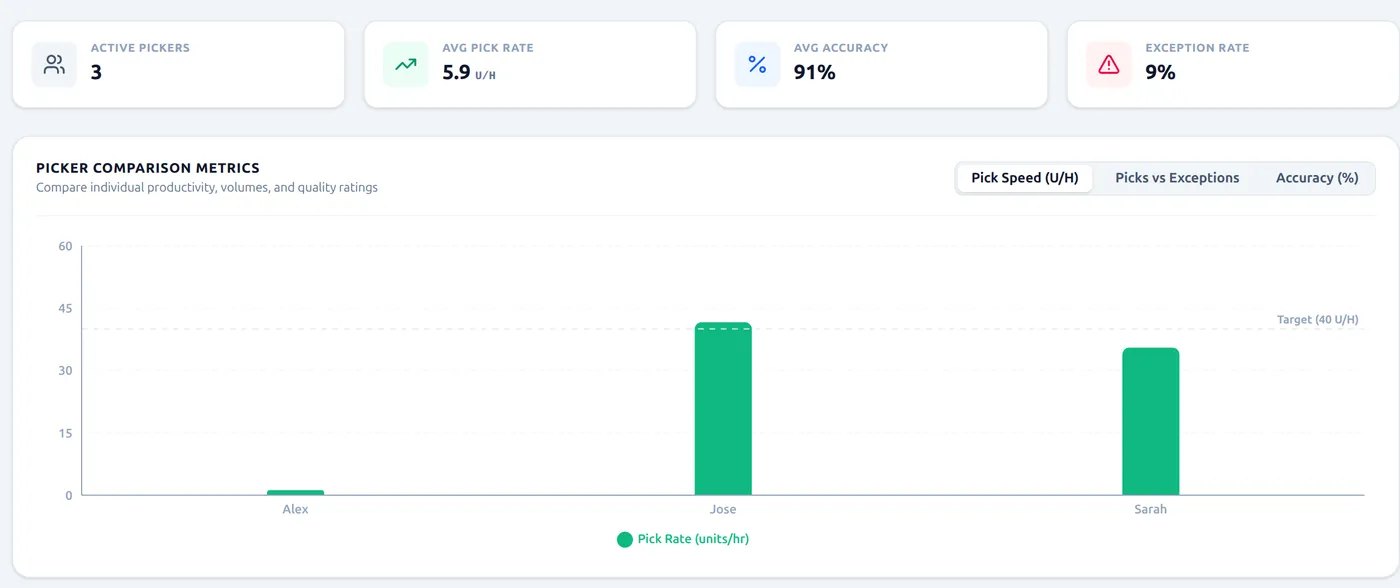
Once picking activity is captured digitally, supervisors can begin to understand workload, completion, exceptions, and performance without reconstructing the information from paper.
The current prototype explores team and individual reporting. The final reporting approach will be shaped by discussions with warehouse operators and the measures they actually find useful.
PickPaperless is currently a working prototype.
The next step is to speak with warehouse supervisors and operators who still rely on paper picking, understand how their workflows differ, and determine what would be required for a useful pilot.
We are not asking warehouses to adapt themselves to a finished product. We are looking for practical feedback on where paper creates problems, what a digital replacement must preserve, and which capabilities would provide real value.
A short conversation or a blank, sample, or redacted pick sheet is enough to begin.
PickPaperless is intended to preserve what works in the current process, remove the most costly limitations of paper, and create a path toward more structured warehouse operations over time.